
[SB]
[SN001]

PUBLISHED_09_04_2026
Studio Note 001: Back in the Game
Last year I had the best six months of my career.
Then I quit taking on design work.
From June through December 2025, I made more money than I ever had, working on the best projects of my career. December was my first solo six-figure month. It came from a single client who gave me an unusual amount of creative trust. The collaboration was fast and intense, and the work felt like some of my best yet.
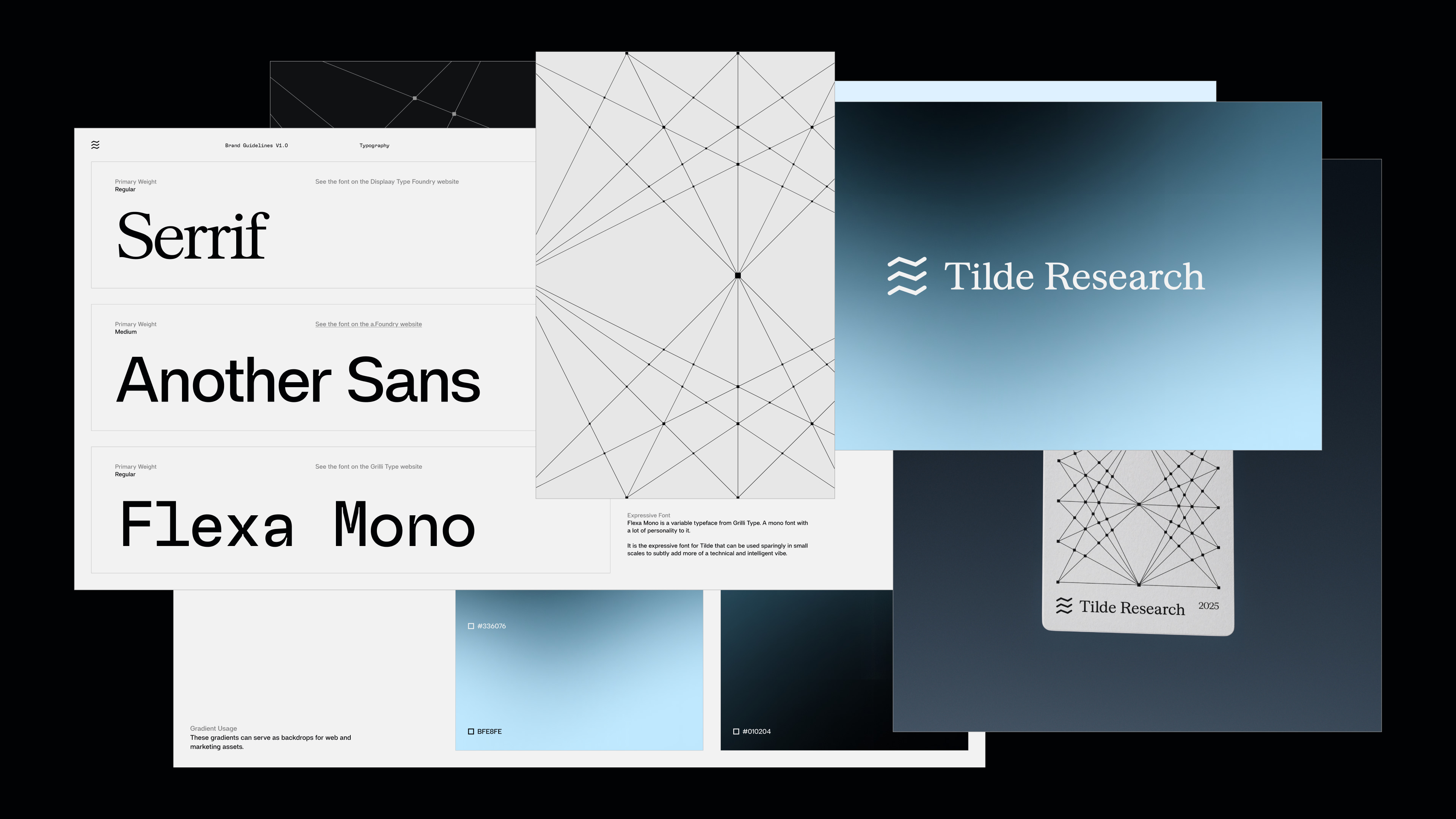
Tilde Research, 2025
And yet, some mornings I woke up dreading design.
So I took a break.
Around then I got a taste of Claude Code for the first time. I decided to make no income and just go explore building and selling software with a friend. We spent most of the next six months building Halogen, a macOS app for creating app demos.
The first idea was basically Screen Studio for iOS. Later we moved toward agentic infrastructure for autonomous demos. It was my first time having full control over the design and UX of my own product.
Section_02
What Halogen taught me
My favorite part of building Halogen was designing/building the brand and frontend. I could have an idea, prompt it into existence, and immediately see it in prod. The feedback loop was addictive. My designs suddenly felt real and tangible.
In my head I was genuinely set out to make the world’s best-designed software product.
I started working on it while visiting Japan for the first time with my friend Michael. We would usually wake up around 730/8ish and then go gym, and go explore for the day. Sometimes working at cafes mid day.
To this day I don’t know what it was, but my body kept waking up at 5 or 6am on its own. I would immediately reach for my laptop and start ripping prompts on Claude Code terminals. I don’t think they were good or optimized at all, but the feedback loop was so quick that I could FEEL myself birthing and improving the product. Even the bugs were fun. Months later I would sometimes scream in my living room (all alone) from joy when fixing a bug that took ~30 prompts.
Part of me thinks the models were genuinely faster back then lol. Or maybe my prompts were simpler. I don't know.
All I know is that I finally felt obsessed with something again.
The last time I felt this way was in late 2021, for a crypto project I worked on full time with 2 friends. Fast feedback loops, a lot of art and design, posting constantly on Twitter and watching the market react in real time. It stayed on my mind all day.
After that project slowed down, I spent ~2 years just trying to survive. I knew obsession was worth chasing, but I took whatever projects I could get, and it’s hard to chase much while worried about money. It wasn't until those six months in 2025 that I had enough runway to take a substantial risk again.
One night specifically was very special to me.
I was working in the evening generating wallpapers with Flora. (At this point, i’d realized I enjoyed working evenings, even until 2am most nights, something i’d never done before.) I made an iridescent background by referencing work I had found on Pinterest. It wasn’t anything too insane or new, but it looked so good to me that I fell to my knees, yelled, and teared up. I stopped what I was doing and went outside to watch the sunset.
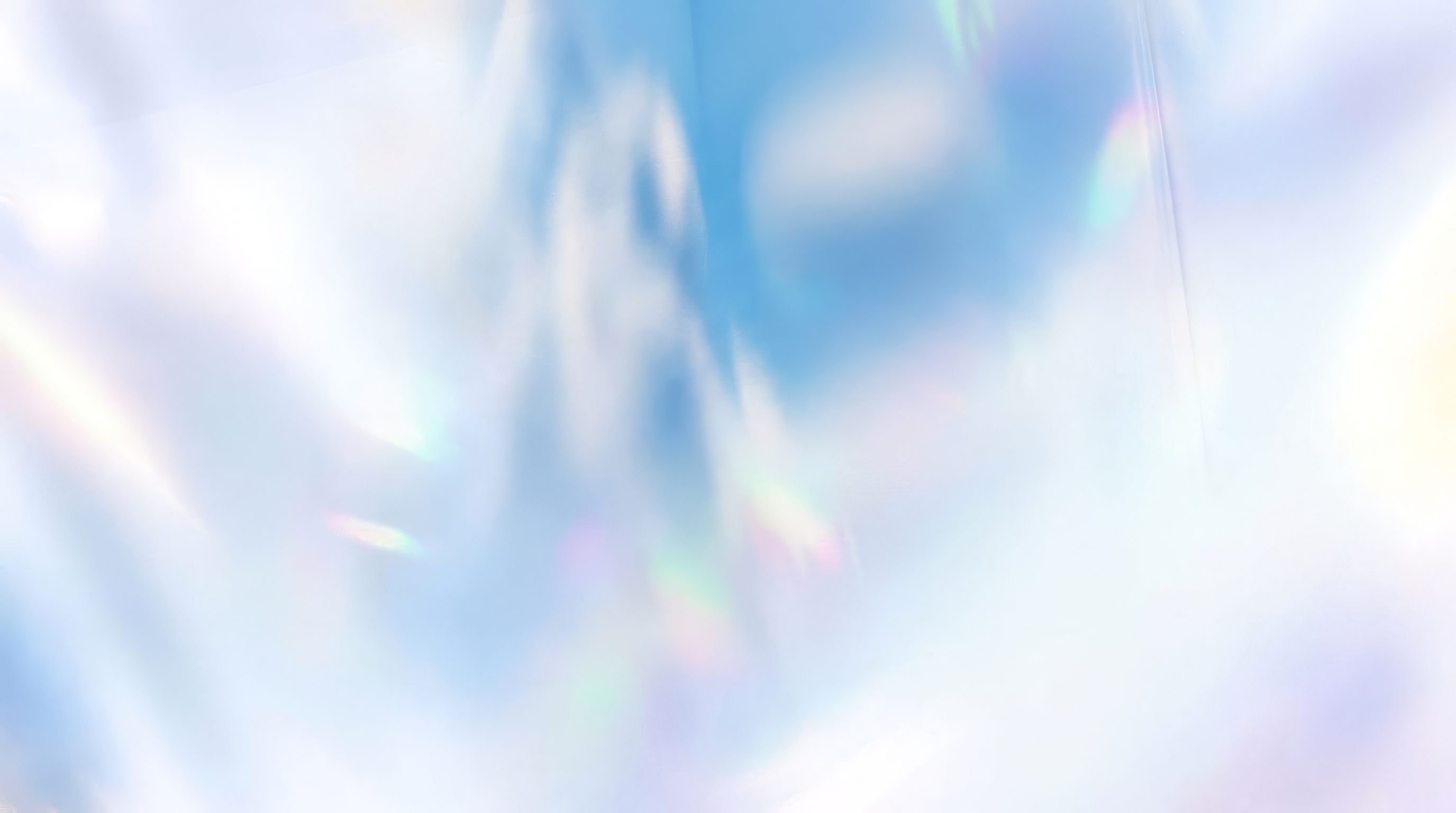
the background that i generated in Flora
It sounds ridiculous. But in my head I had made something I thought was so beautiful, and realized that other people were going to use it.
Once the work shifted toward user calls, distribution, activation, conversion rates, and waiting for market feedback, my fire died down quickly.
This made something obvious. I’m more of a creative builder than an operator or salesperson. More artist than businessman.
I do think I have an instinct for users, content, and distribution. I’m curious about a lot of aspects of building a business. But they’re just not as fun to me as making something great.
Halogen also made me realize I’m more technical than I had given myself credit for.
For years I dismissed myself as a designer who makes things look pretty. But I also like engineering, math, and understanding how systems fit together. Math was actually always my best subject.
As a kid, I loved hacking around on my computer and consoles. Being in the Claude terminal felt like running Minecraft commands and hosting servers again. I had forgotten how much I liked that feeling.
I also discovered that I’m good at image generation, wallpapers, and gradients. I had always avoided gradients actually. Now I think they may be one of the things I’m best at.
But in July I ultimately decided to stop treating Halogen as my main project.
The short answer is that I got bored. The feedback loop toward PMF felt slow and I didn't enjoy distribution. When my cofounder left, continuing alone didn't feel worth forcing.
Halogen is still live and I'll probably keep shipping updates occasionally. It's just not what I'm pointing myself at anymore.
Section_03
Why I stopped taking on design work in the first place
1) Part of the problem was a mismatch between how clients saw the work and how I saw it.
A lot of early-stage companies treat brand and web work as launch marketing. Which is fair. It often is.
But I was treating it more like art.
I’d make a logo that I thought was objectively better than the client’s current one, but it sometimes wouldn’t get accepted unless I spewed up a lot of storytelling, notes and documentation. It felt more like Sales than Design. Sometimes even after days of arguing, the client still wouldn’t budge on the logo.
That used to frustrate me. Now I realize that it’s part of the job.
Making the work is only half the work. You also have to help other people see what you see. Everything is sales. And being able to articulate and sell your vision is important.
2) The bigger problem was probably novelty.
The projects started to feel the same. I wasn’t pushing myself or the work enough. I’ve realized I tend to get bored and need new stimulation pretty often.
But this IS one reason client work fits me so well when it is working. Projects usually last a few weeks. You enter a new world, learn it, create a vision, make something beautiful, ship it, and move on.
In a way it feels like dropping a song or an album. It represents a certain period of your life and the expressiveness you felt during that time.
A 2 - 6 week project sprint fits my brain better than working on the same product for 6+ months.
I had also confused dreading design work with being on the wrong path.
Now I know that joy from creative work tends to oscillate. One day you feel like the goat. The next day you hate everything and everyone. Fred Again talks about this. Rick Rubin talks about this. Etc. Realistically, that may be the one thing that remains constant in creative work.
Also, sleeping better and having an actual routine helps.
Section_04
Back in the Game
I’m reopening my independent design practice.
I’m doing it from New York City, where I just moved in recently (early July). The density of people and ideas here feels right for the collaborative studio I want to build.
I’m also restarting Artifex (Latin for “artist”), a series of self-directed brand studies that function as research, public work, and occasionally acquirable brands. You can see my first one here
I don’t want to rebuild the situation I left.
I want to be more selective about clients. I want more ambitious projects, more difficult creative problems, and more collaboration. Emphasis on more collaboration.
I want to make frontier technology companies actually feel frontier. I want to pull from scientific visualizations, diagrams, interfaces, gaming, and culture — and use code, motion, shaders, generative systems, and dense technical graphics to build something new. Digital, colorful, technical, and alive, but still premium and controlled rather than chaotic or experimental for its own sake.
I also want to reserve about 20% of my time for internal work: Artifex/research, fashion, videos, apps, or whatever else feels worth making. These are things I always wanted to explore more but never did. I always thought they had to be outside of my design studio. Now I realize I can just integrate them into it.
Product taught me that shipping a design at 70% in 1 week is more valuable than perfecting it in 2 weeks. My perfectionism doesn’t exactly enjoy this.
Studio work gives me permission to care more about exceptional output. I missed that. I missed visually rich work and making things with other people.
There are definitely weaknesses of the studio model: the work may not last, clients may never love it as much as I do, services don’t compound as nicely as software, etc.
I’ve accepted those tradeoffs. For now, I just want to rebuild momentum with 1-2 engagements at a time, leading the work myself and bringing in collaborators where it makes sense.
As the studio grows, I want my role to shift towards mainly creative direction. Moodboarding + setting the vision has always been my favorite part. I love finding obscure references, shaping the story, and talking through how it should come to life. All while staying hands-on.
Once the work supports it, I want to build a small, full-time, in-person team. Collaborating closely with other people gives me energy and just makes the work better.
I used to think growing a studio meant becoming a manager and giving up the hands-on work. Studios like Mouthwash changed my mind. They’ve shown me that a studio can stay small, bring in collaborators as needed, and still produce frontier work without doing every pixel yourself.
For a while I actually thought I wanted to leave tech entirely. The creative bar seemed higher in music, fashion, photo and film, sports, gaming, and culture.
Now, I think the studio can be the way into those worlds. We can make clothes, shoot photos and videos, spawn our own products, host events, and still do serious brand and web work for ambitious technology companies.
I’m publishing these notes for accountability and documentation. I want people to be able to follow the process while it’s happening, not only see polished announcements after something works.
I’ll track commitments completed, work shipped, conversations, and lessons.
Revenue numbers matter too, of course. But right now I care more about producing exceptional work and continuing to challenge myself as a founder, designer, artist, athlete, and person.
I want to publish these studio notes whenever there is enough to update on. Probably monthly at first. Maybe even biweekly or weekly if there is enough interesting work or studio development.
Section_05
September goals
1. Outreach: Reconnect with ~20 former clients / founders / VCs, and collaborators
2. Clients: Open up space for 1–2 new client projects
3. Case Studies: Design + post Valthos, Paradigm, Tilde Research and Halogen case studies
4. Artifex: Introduce Artifex and share more of the thinking behind it
5. Artifex: Create and launch one new Artifex brand
6. Research: Publish 3 smaller design experiments (motion, typography, or interaction)
7. Team: Meet new collaborators and bring someone new into a project
8. Sharing: Post daily on X - finished projects, work in progress, experiments, thoughts on design, etc.
Right now I’m especially interested in VC-backed AI, biotech, defense-tech, infrastructure, and other frontier-technology companies preparing for an important next chapter.
If that sounds like you, or you know someone I should meet, reach out.
If you’re a designer and want to chat about potential collaborations, feel free to reach out as well.


